
At WFT Ireland, a big part of what we’re striving to do is amplify voices that shift perspectives and to spotlight the remarkable work of our members. This month, our Member in Focus is filmmaker Nicola Leddy, whose short documentary Boobs has struck a powerful chord at home and continues to reach audiences internationally.
The film takes us into the artistic world of Geraldine Carton, who set out to paint one hundred breast portraits representing women of all ages, identities and lived experiences. Through Nicola’s lens, Geraldine’s ambitious project becomes more than an exhibition: it’s a cinematic space where humour, vulnerability and solidarity sit side by side. The documentary embraces individuality while fostering a strong sense of collective belonging, showing bodies with a framing that conveys intimacy and joy.
Produced by Anna Rodgers and Zlata Filipović (both WFT members as well), with Susan Liddy, WFT Chair and President of WIFT International, and Aoife O’Toole as Executive Producers, the film embodies the collaborative strength of women-led storytelling. Recognition has already followed: Boobs was awarded the Catalyst International Film Festival Short Doc Bursary in 2024 and went on to screen at Fastnet Film Festival, DOC NYC and Newport Beach.
Closer to home, Boobs was also selected for the WFT Ireland Members’ Short Film Showcase – our annual programme celebrating outstanding short work by WFT members – where it went on to receive the Best Non-Narrative Award.
Alongside this success, Nicola is developing her feature documentary The Queen of Matchmaking, exploring the famous Lisdoonvarna festival and its radical queer counterpart, The Outing. Recently selected for the 2025 Docs Ireland Marketplace, the project signals an exciting new chapter in her filmmaking journey.
Nicola, we’re delighted to spotlight your work and to talk with you about Boobs, your creative process and what lies ahead!
- First of all, congratulations on the success of your film BOOBS. It’s such an intimate and celebratory film and one that resonates with audiences while also carrying a strong sense of activism and community. That distinctive approach to storytelling makes us curious: what first drew you to filmmaking – and in particular, to documentary?
For as long as I could remember, I loved to create. My parents would always give me space and materials to paint, draw, papier mache, and most notably, they bought me a typewriter that I adored. I would write poems and short stories- all fairly terrible, but it’s what kept me busy! When it came to picking what to study in university, I had no idea what to pick. I loved art and English in school, but I wasn’t amazing at that either! I was looking at all the creative courses, and I came across Communications in DCU. It had a bit of everything. Little did I know, the first time I picked up a camera in my first year, I was absolutely hooked. That was it, I thought. This is the thing I want to do.
As for the activism, I grew up playing Ladies Gaelic football in a little parish in Co. Meath. It didn’t take long for me to notice how little media attention women’s football got over men’s football. I initially thought: I’m going to become a journalist so that I can promote every woman’s sport, so that women get the resources and support that they deserve. I grew up fundraising like hell with that club- and ended up being the secretary at one stage. If we weren’t putting on fundraisers, we were coming up with some other way to get sponsors. It was an incredible community, we were loud, unapologetic and absolutely ourselves. That sense of community and drive is what I put into my filmmaking now, I always think: how can I give this important subject a platform with the skills I have? I grew up with such a strong female-led community, so it’s just something I seek out in my projects.
- How did you find your way into stories that are so deeply personal and human-centred?
Growing up, strangely enough, The Late Late show and the Adrian Kennedy show were huge influences on me- just raw interviews where people talked about their lives, the things they were going through. I loved how this would start such deep conversations at home as well. So I immediately associated deep conversations with deep human connections.
And that helps a lot when you’re speaking to people who have gone through a lot. I think, maybe the films that I like to make are just extensions of those conversations I grew up listening to on the Late Late! So when I approach people about documentaries, I have a genuine interest, and maybe they can sense that.
- How did the concept for the film BOOBS come about? Tell us a little bit about your first encounter with Geraldine Carton’s project and about the production process.
I was scrolling through Facebook looking for inspiration when I saw a friend of mine had shared Geraldine’s callout for participants. Right in the middle of my feed read ‘BOOBS’. Well, obviously, I was intrigued. I saw Geraldine’s post, saw her art, and I was sold. We were on the phone to each other within a day and we immediately clicked.
I did a test shoot with her, which consisted of filming 10 women at her house, and taking photos of them in different poses that would inspire the paintings. She threw out questions when the women were posing for the sketches and the conversations that they had were incredible. I knew right then and there that there was a documentary in this project.
- The film touches on sexuality, disability, gender identity and age, among other themes – and the tone sways between humorous, vulnerable and ultimately unabashedly joyous, making us as individual members of the audience feel seen and feel in community. Is there anything in particular you hoped audiences would take away?
What a lovely way of describing it- unabashedly joyous. Yes, the aspects that drew me to Geraldine in particular were her humour and sincerity. There were moments where we were just trying to make each other laugh, but also where we shared some really vulnerable stories. And I think Geraldine’s presence is the secret sauce of this film- she’s genuinely a funny person and brought out this wonderful silliness where everyone could just relax. And that’s a huge thing that I want the audience to take away: women are funny!
As far as feeling part of the community, I always wanted to give a sense that you might be in the room with the women – we used prime lenses, shot super close, we hear multiple conversations going on, you’re almost sitting on that couch. We are not ‘voyeurs’ sitting outside the group with a zoom lens.
Finally, that last shot in each section is so important to me. It’s the women looking straight down the lens, almost daring the viewer to look at them. It’s vulnerable and strong at the same time. I wanted it to look like a classic oil painting, but instead of the naked woman (most likely painted by a male painter) looking demurely off into the distance, I wanted everyone to look straight down the lens- in absolute defiance. If there’s one thing I want women to walk away with, it’s the confidence to hold their heads up a little higher, look people in the eye, and be unabashedly joyous. That’s everything to me.
- Did the structure of the film or the script change as you went along, compared to what you set out to capture?
The version that I pitched to Catalyst opened up on Geraldine introducing us to the exhibition space in the Royal Georgian Society. But when we had everything shot, I realised I had that wonderful moment where Noeleen makes the group laugh- saying that her mother thought that Geraldine’s project was ‘porn’. It set the scene and tone perfectly.
- We have to ask: How many of the 100 portraits did you film? And what informed the editorial process? Were you after capturing a particular idea or feeling that you would hope the audience would experience when watching the film?
We filmed all 100 portraits at the exhibition technically. However, we did a more in-depth shoot for four of the portraits. For the rest of the paintings, Geraldine filmed herself on her phone, which provided us with additional coverage of her epic journey of painting 100 portraits.
A few key elements massively informed the editorial process. First, the documentary Smoke Sauna Sisterhood was a huge inspiration to me. I watched it repeatedly to study the flow of the film, noting how each beat transitioned into the next and how the whole piece was formatted into sections. I probably screenshot every frame of that film and pored over the style with our cinematographer, Alba Fernandez.
Secondly, the budget was definitely a practical constraint. Knowing I only had the budget for four or five days of shooting with a crew, I had to be very strategic about how to capture the full story within those days.
Most of all, I wanted the film to be informative. I want men and women alike to watch this and think, “Wow, I never realised that.” Having that kind of shift in perspective would be a huge win.
- The shots are beautifully and tenderly captured, looking at the subjects through an affirming, celebratory and uplifting lens, rather than scrutinising. Can you talk about your approach to capturing intimacy, visually and editorially?
In my degree in DCU, I was introduced to what the ‘Male Gaze’ was in a wonderful class by Prof. Debbie Ging. I was obsessed by this whole concept. I studied the type of camera movements and cinematic techniques that are so commonly used when a male director and and male cinematographer film women. For eg, a particular camera shot happens when the male director wants to scream ‘sex object’: a woman walks into the shot, the camera starts at her feet, and lingers up her legs slowly up her body until we reach her face. This kind of shot is rarely done with male subjects. This, along with about 7 other techniques, slowly but surely degrade women to purely sexual objects in films. So I needed to do the absolute opposite of this. A Female Gaze film. It’s so subtle, but very recognisable.
Secondly, Alba is expert at lighting for different skin tones. Every shot celebrates the skin- every stretch mark, every tattoo, every scar, we wanted it all to look unapologetically stunning.
- What was the biggest challenge in making BOOBS? And was there anything that surprised you or that you learnt along the way?
At the very beginning of this project, I had ambitious plans of working with an entirely female team. Little did I know how rare it is to work with a female soundie. We had actually had booked in a female soundie who got Covid the night before the first shoot. But we figured out a way that Danilo could be in the kitchen whilst we shot in the sitting room. Otherwise, we did actually have a majority female team which was incredible.
- We can imagine that your work requires people to share very personal stories and to allow for their vulnerability to be seen. How do you go about building that trust with your contributors?
I think it’s incredible how a lot of us can be happy to share once the question is asked in a sensitive way. I try to approach every conversation with genuine empathy. This means being an active listener- not interrupting, allowing for silence, and responding with human connection rather than just moving on to the next pre-planned question. I think when people feel truly heard, the defences naturally come down, and they are more willing to open up. That’s exactly what happened when Sorcha said the line ‘I don’t think I need to be fixed’- I allowed silence after she’d said ‘a lot of people think I need to be fixed’ I’m guessing she could see it in my face that what she was saying was heartbreaking, and she wanted to clarify. Silence is really powerful like that. It gives space.
- BOOBS is already having a remarkable run, from winning at Catalyst to heading to major festivals abroad – How did winning the Catalyst International Film Festival Short Doc Bursary in 2024 shape the film’s trajectory?
Winning the Catalyst International Film Festival Short Doc Bursary in 2024 was truly transformative – it completely changed the trajectory of the film, and honestly, my entire career!
The bursary meant I finally had the resources to bring on the incredible expertise of Invisible Thread Films. Their involvement completely elevated the project. Suddenly, we had a budget that allowed for an amazing cinematographer, sound mixing, colour grading, a polished final edit, music rights and so many other aspects that wouldn’t have been possible otherwise. Without that specific infusion of funds, the film simply wouldn’t be the piece you see today.
Beyond the production quality, the bursary was the key that opened the door to the festival circuit. At the very least, it provided the essential budget to cover submission fees for major festivals. This financial boost allowed us to submit to some top-tier international festivals where BOOBS has since been accepted!
- You have recently screened the film at DOC NYC and Newport Beach. Congratulations! What does that festival journey mean to you?
For me, the most magical part of festivals is the connection. Bringing the film to different communities and being in the room to hear the whoops and cheers is an incredible experience. I see women leaving a screening of BOOBS as if a weight has been lifted. And the women in my film feel like superstars at every screening they go to, and rightly so!
- And you’re already looking ahead – your next big project promises to be just as exciting: your feature documentary The Queen of Matchmaking was recently selected for the 2025 Docs Ireland Marketplace. Can you tell us a little about the project and what audiences can expect?
I’m so excited about this one- expect drag queens, speed dating, power ballads and a whole lot of heart.
- Your work often feels driven by a feminist sensibility, and it’s clear you’ve carved out a strong voice in the industry – what has helped you most as a woman navigating the Irish film industry?
Honestly, the game-changer has been getting my own camera equipment. I got a bursary, and with that, I could afford a basic Sony FX6 kit, mics and lenses. As a filmmaker, you have to prove you can do the job before someone’s going to give you funding- you have to ‘sit in the seat before you get to sit in the seat’ per say- and as a female filmmaker you have to prove you have ‘what it takes’ 100 times more. So with equipment, I was able to shoot my own shorts and create sizzles to apply for funding.
But above all, there’s been an incredible cultural shift in the last 5 years to promote underrepresented voices in the industry. It’s the remit of the Catalyst Film Festival Bursary I received. And female filmmaker groups are demanding 50/50 representation in the industry. That’s really powerful and has no doubt influenced hiring and funding decisions. I have huge respect for those women who have carved a path so that filmmakers like me can walk it.
- Finally, what advice would you give to emerging creatives who feel drawn to a subject or community and want to start documenting it?
My biggest piece of advice is to find a genuine connection. Some filmmakers say that we make documentaries about ourselves – but actually, I make documentaries about people that I want to hang out with. I think people can sense if your intentions are genuine, so seek out communities that you genuinely care about. I think from there, no matter how you shoot it, the project will have integrity and authenticity, and the audience will sense that a mile away.
Thank you, Nicola, for taking the time to speak with us and for giving us a glimpse into your filmmaking journey. We’re excited to see what’s ahead for you and to follow your upcoming projects!
Boobs will also be available to stream on Éiretainment throughout St Brigid’s Weekend, from Thursday 29th January 2026, offering audiences another opportunity to engage with this powerful film.
Watch it here via Éiretainment:
https://www.eiretainment.com/film/boobs/
About NICOLA LEDDY:
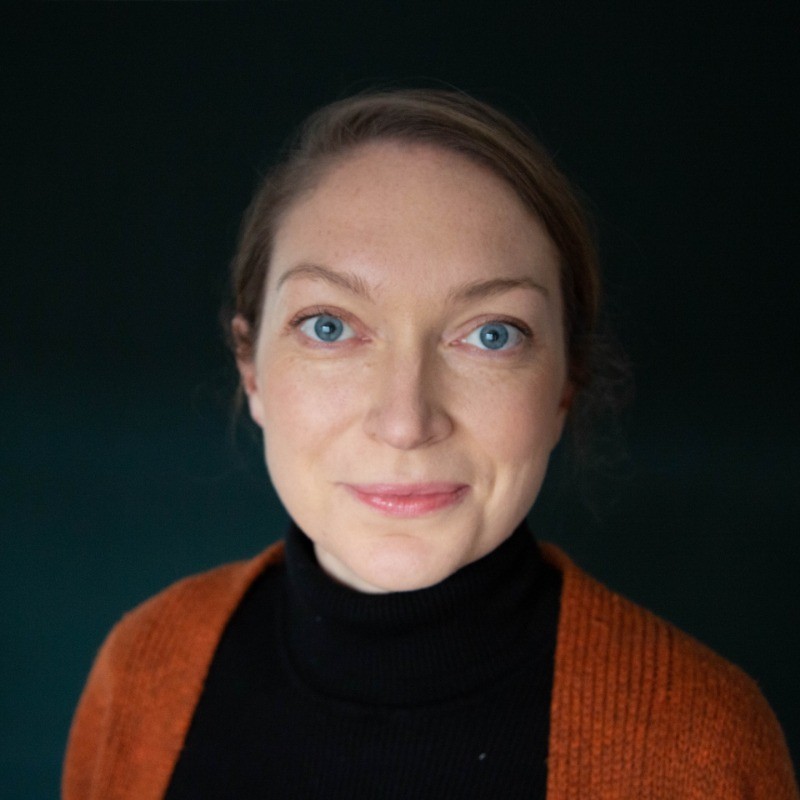 Nicola Leddy is an accomplished Director with over 12 years of experience crafting compelling narratives for major platforms including BBC1, Channel 4, Channel 5, and National Geographic. Her distinctive directorial style is characterised by a blend of playfulness, humour, and a profound respect for contributors, consistently championing underrepresented voices and fostering safe environments for honest, heartfelt storytelling.
Nicola’s debut short documentary, ‘Boobs’, achieved significant acclaim, securing multiple Best Short and Audience Awards, and recognition at international festivals like DOC NYC and the Cork International Film Festival.